The smell of history and bad coffee
Vilnius doesn't greet you with a smile; it greets you with the smell of wet pavement, cheap cigarette smoke, and a faint, lingering trace of diesel exhaust that seems to drift up from the asphalt no matter where you stand. I have spent enough years on the road to know that a city’s soul is never found in the manicured plazas where the tour buses park. It is in the courtyards that look like they haven't been swept since the Soviet era, where the paint on the doorframes peels back to reveal layers of history that nobody bothered to preserve. The air here tastes like iron and woodsmoke in the winter, and in the summer, it’s a humid, heavy mix of rotting fruit from the markets and the sharp, chemical bite of cheap cleaning agents. You walk through the Old Town and you see the Baroque facades—those ornate, over-the-top stone flourishes—but look closer. The plaster is shedding like snake skin. The statues have lost noses or fingers. It is beautiful in the way a derelict mansion is beautiful, assuming you have the stomach for decay.
Tourists miss everything because they are too busy looking at their phones or complaining about the lack of free public toilets. They walk past the narrow gaps between buildings that lead to the courtyards, those private, silent spaces where the city actually lives. I spent three hours last Tuesday sitting on a rusted metal chair in one of these spots, listening to an elderly woman yell at her cat through an open second-floor window. That is Vilnius. It is not about the church spires; it is about the silence that hits you the moment you step away from the main streets. It is about the way the light catches the graffiti on the crumbling brick walls of the Užupis district. It is about the fact that you can buy a decent coffee for 3.50 EUR, but the chair you are sitting on might collapse under you if you shift your weight too suddenly. I like it that way. It keeps you honest.
The survival manual for the cynical traveler
If you think you can just breeze through Lithuania in a rental car without getting your teeth kicked in by bureaucratic nonsense, you are delusional. I learned this the hard way back when I thought I was smarter than the local rental desks. You get to the counter, they smile, they hand you a key, and then you find out the hard way that your standard credit card insurance is about as useful as a chocolate teapot when you are staring at a deep, jagged pothole that has swallowed half your front bumper. Or worse, you deal with local agencies that find a mysterious 'new scratch' that was definitely there before you touched the handle. This is why I eventually stopped rolling the dice. I stick with Localrent.com because they actually understand that people like us want a car without the predatory fine print. It is about minimizing the friction of travel so I can spend my energy finding a decent place to eat rather than arguing with a clerk who gets paid a commission to ruin my afternoon.
And then there is the connectivity trap. You land at the airport, your phone is roaming, and suddenly you are paying five euros for every megabyte of data you use to check a map. It is amateur hour. Do not be that person. I stopped relying on local SIM cards years ago because the queues are long and the staff usually assumes you are there to waste their time. Instead, I just fire up Yesim before I even land. It is an eSIM solution that takes the stress out of the equation. You get data, you get coverage, and you don't have to talk to anyone. In a city like Vilnius, where the GPS signal loves to bounce off the stone walls and drop you in the middle of a courtyard that doesn't exist on Google Maps, having reliable internet is the difference between finding an authentic tavern and ending up in a tourist trap that serves lukewarm pierogi and charges double for the privilege.
The reality of the road
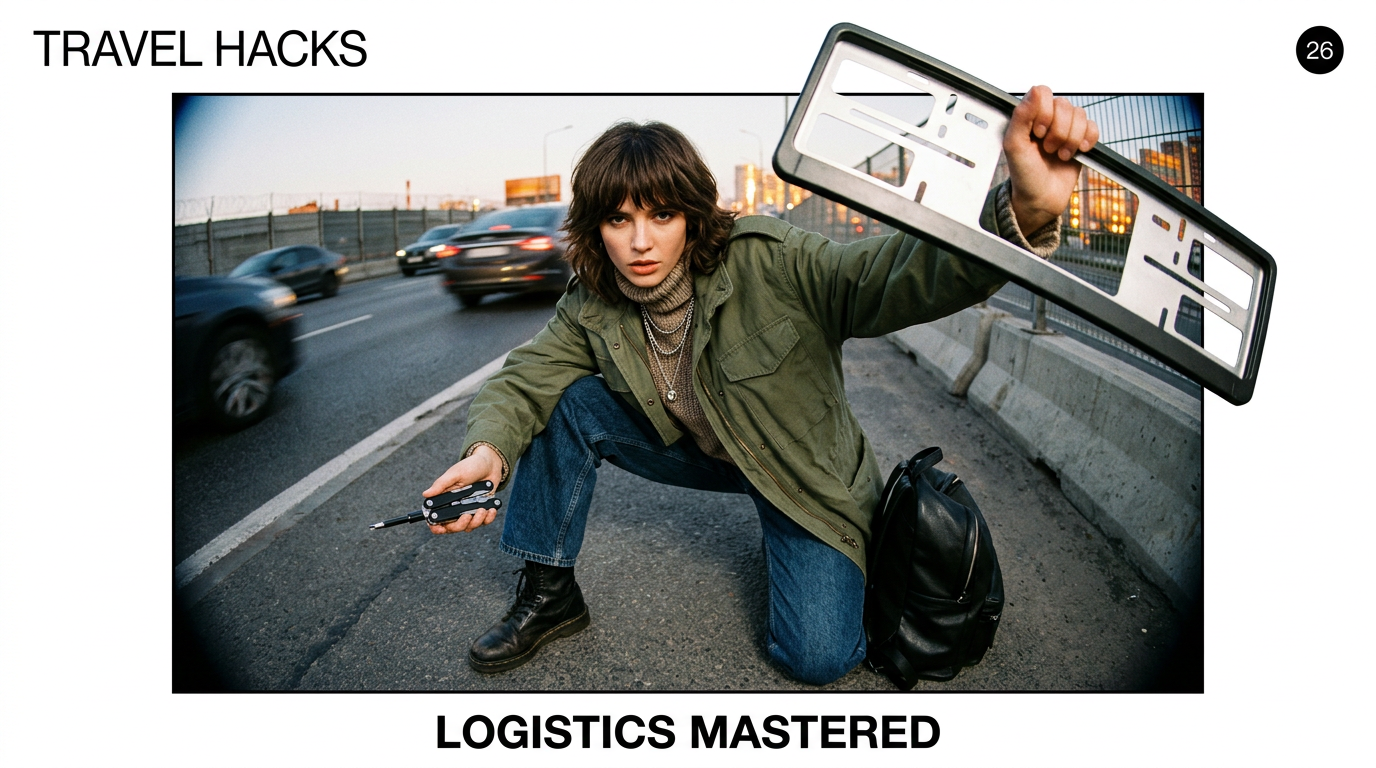
Driving here is a test of patience. The potholes are not just holes; they are craters. Some of them look like they were carved by artillery. You have to watch the road, watch the signs, and watch the local drivers who seem to treat stop signs as polite suggestions rather than legal requirements. But there is a rhythm to it. Once you stop fighting the chaotic flow of the traffic, you start to see the beauty in the chaos. The way the suburbs melt into pine forests, the way the road signs turn into a jumble of unpronounceable names that make you feel like you are driving into the middle of nowhere. I love that feeling. It is the only reason I still travel. Everything else is just logistics, and if you can fix the logistics with a few smart clicks, you get to keep the freedom to get lost, which is the only goal worth having. Don't expect comfort. Expect to be tired. Expect to pay for your mistakes. But if you have the right tools, you might just survive long enough to appreciate the way the sun hits the Vilnius sky at five in the evening, turning everything into a shade of bruised purple that feels like it belongs in a different century entirely.